UX Case Study | Research presented at World Design Organisation in Hyderabad
Potter’s electric wheel with a digital intervention
Year
2019
Client
Personal Project
Role
UX and Interaction Design
Team
Solo
Scope
UX Strategy, Research, and Innovation

Poster Presentation
Poster Presentation
I have been given the extraordinary opportunity to present my work at the World Design Assembly in Hyderabad. This prestigious event is organized by the World Design Organization (WDO), previously known as the International Council of Societies of Industrial Design (ICSID). The WDO is a globally recognized non-governmental organization dedicated to advancing the field of industrial design and its impact on the creation of superior products, systems, services, and experiences. By fostering better business and industry practices, the WDO ultimately strives to create a better environment and society for all.

Background
Pottery, an ancient art form, brought a significant change in the Neolithic era by introducing a new way of cooking and storing. It quickly became a major profession with potters forming communities and passing their skills from one generation to the next.
Indian pottery clay varies by region. Matka was used for storing water but is now declining due to water filters. Diwali diyas are shifting from traditional clay lamps to Chinese bulbs.
Traditional pottery faces declining sales due to modern technology replacing ancient techniques. The younger generation of potter families is often not interested in continuing the family business. Solutions are needed to restore the importance of traditional pottery.
Design Process

Contextual Inquiry
Contextual Inquiry
Contextual inquiry in Mundhwa, Maharashtra studied socio-economic conditions and challenges faced by potters and customers in Kumbharwada. 20+ potter families were interviewed to identify specific economic and social challenges they face, as well as customer needs and expectations. The inquiry aims to inform strategies for promoting and sustaining traditional pottery practices in the face of modernization and changing consumer preferences.

Flow Model

Sequence Model

Cultural Model

Artifact Model

Physical Model
Research Insights
Potters work long hours in static positions causing discomfort, including lower back, neck, and wrist pain, knee pain, and shoulder pressure.


The younger generation is hesitant to continue the family business due to social status, economic conditions, and physical demands of pottery work.
Electric wheels are challenging for potters as they can't shape pots and control speed at the same time. They are unusable without electricity, heavy to move, and unsuitable for making gamla.


Potters use old tyres to fire pots due to their low cost, but this practice causes pollution. Unequal distribution of fire can cause some pots to be overcooked, while others may crack.
Payment records and other crucial information are recorded manually in notebooks, which are vulnerable to damage from rats, water, and poor maintenance, leading to a loss of valuable data.


Pottery soil quality depends on the potter's expertise. Without them, there's a risk of low-quality raw materials being used, resulting in subpar products and damaging their reputation.
Professional artists in the pottery industry can be demotivating and concerning for traditional potters, leading to increased competition and difficulty in sustaining their business.

Persona

Competitive Analysis

Storyboarding

Ideation
1. Digital Record System
Pros
1. Easy to manage the records.
2. No chance of misplace.
3. Search data with a single touch.
4. Feed the data immediately.

5. Access data from anywhere/ anytime.
Cons
1. Potter’s hand will be covered in clay and he
won’t be able to use the digital record form.
2. It is not possible to wash hands every time user
wants to feed in a record.
2. Workplace integrated with IOT
Pros
1. Closed storage will reduce the loss of products.
2. Separate workspace will save the family
members from respiratory diseases
3. Proper presentation of products might increase
the sale.
Cons
1. Renovating the land can be a costly affair and
requires a lot of time.

2. Buying a computer might not be feasible
immediately.
3. Digital India is a slow government process.
4. Ceramic blanket is costly.
3. Packaging
Pros
1. Giving identity to potters can be a motivation
to new generation to take over their family
business.
2. Proper presentation will attract more
customers and increase sale.
3. Online product will increase their products’
market value.
Cons
1. Maintaining website can be a burden on potter.

2. Making a good brochure requires a good
designer which can be costly.
3. Owning a website is costly.
4. Soil Quality
Pros
1. Easy to find quality raw material.
2. No returns.
3. Anyone in the house can check quality of clay.
Cons
1. If the clay quality check at the vendor’s place.
So, the transportation investment will be less
and every time all the potter’s will get good
quality clay.

5. Ergonomics
Pros
1. Less strain on the neck as the wheel is kept at
a proper level.
2. Hands will be in neutral position.
3. It will compress spine the least.
Cons
1. More detailed study is required.
2. It is necessary to understand the medical
aspect with the help of a doctor.

6. System Design
Pros
1. Brings the potter’s community together.
2. Knowledge exchange.
3. Opportunity to learn new technique.
4. Sale all the year round.
5. Premium customers visit the exhibition.
6. It will increase the social status of a potter.
Cons
1. To make a system work is time consuming.

2. To convince government requires a lot of
effort.
3. The solution cannot happen immediately.
7. Electric wheel with Digital Intervention
Pros
1. If no electricity, then this is useless.
2. It is really heavy to move the machine from
one place to another.
3. Gamla cannot be made as it requires both the
hands to shape the product.
Cons
1. The electric wheel can be redesigned by
looking at the ergonomic factors.
2. It can be battery powered to cope with power-
cut issue.
3. The battery can be charged with solar energy.
4. Wheel which will also act as stopper will be
incorporated at the bottom to make it easy to
bottom.
5. Load sensor can be fixed under the wheel to
get derived data.
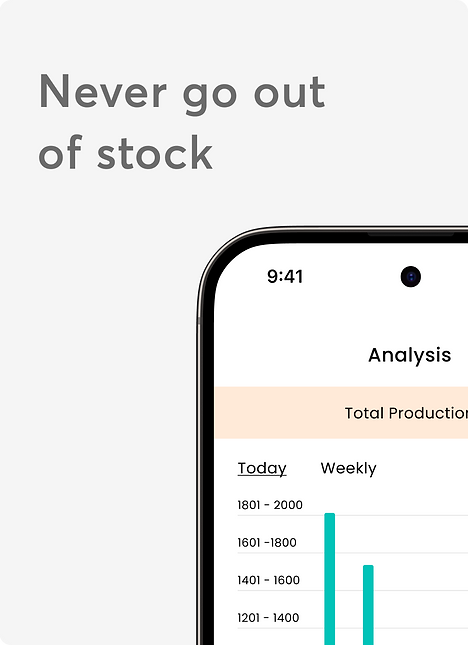
6. The sensor will show the data in an application
which will manage the stock.


Mockup


Prototype